
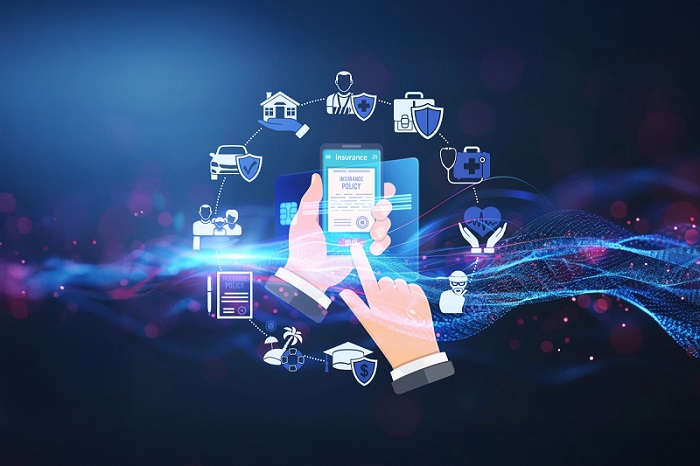
The Role of Digital Insurance Platforms in Simplifying Policy Purchases
For decades, buying insurance was widely regarded as one of the most tedious transactions in personal and commercial finance. Securing adequate coverage required scheduling meetings with captive agents, deciphering dense binders filled with legal terminology, and waiting days or weeks for manual underwriters to review paper applications. The entire process was burdened by structural friction, opaque pricing, and significant information asymmetry between the carrier and the policyholder.
Digital insurance platforms have fundamentally dismantled this traditional procurement model. By pairing intuitive web interfaces with automated data exchanges and algorithmic underwriting engines, modern insurtech systems have turned a cumbersome administrative chore into a streamlined, transparent experience. This evolution goes far beyond merely uploading static paperwork to the cloud; it represents a comprehensive redesign of how risk is assessed, how policies are priced, and how consumers interact with financial safety nets.
Deconstructing the Traditional Friction of Insurance Procurement
To understand the impact of digital platforms, one must examine the operational bottlenecks that historically plagued the insurance industry. Traditional distribution relied on fragmented intermediaries who often represented a single carrier or a narrow panel of providers. For buyers, gathering competing quotes meant repeating the same personal details to multiple brokers over the phone or in person, with no objective mechanism to evaluate whether a policy truly matched their risk profile.
Furthermore, traditional applications placed the entire burden of data collection on the consumer. Homeowners were expected to know the exact age of their roof, the plumbing materials behind their walls, and the distance to the nearest municipal fire hydrant. Commercial buyers faced dozens of pages of operational questionnaires. When applicants inevitably guessed or left fields blank, underwriting delays compounded.
Digital platforms remove this friction by inverting the data-gathering dynamic. Rather than forcing the buyer to supply obscure technical data, modern platforms rely on extensive backend integrations that query municipal property databases, vehicle registries, satellite imagery, and credit repositories in real time. The consumer confirms information rather than researching it from scratch, dramatically reducing the cognitive burden of applying for coverage.
Algorithmic Underwriting and Instant Risk Profiling
The primary bottleneck in legacy insurance was never the front-end conversation; it was the back-end underwriting queue. Historically, underwriters had to manually verify claims histories, inspect physical records, and cross-reference actuarial tables before approving a bound policy.
Modern digital platforms replace manual workflows with automated rules engines powered by predictive analytics and machine learning. When a user enters their foundational identifiers—such as a street address, a vehicle identification number, or an employer identification number—the platform’s algorithms instantly evaluate hundreds of risk variables.
Compressing Underwriting Timelines from Weeks to Minutes
By connecting directly to authoritative third-party data feeds, modern underwriting software can determine roof conditions via aerial photography, assess regional flood and wildfire hazard models, and cross-check driving records in milliseconds.
This automation enables instant policy issuance for standard risk categories, including personal auto, homeowners, term life, and small-business general liability. Dynamic underwriting engines compress weeks of manual actuarial review into seconds, allowing qualified applicants to receive binding coverage and proof-of-insurance documents during a single digital session.
Transparent Comparison and Demystifying Coverage Mechanics
Beyond speed, digital platforms have introduced unprecedented price transparency to a sector that long operated behind closed doors. Multi-carrier digital brokerages allow consumers to view multiple quotes side-by-side, normalized across identical coverage limits and deductible levels. This direct comparability forces carriers to compete on actual value and customer satisfaction rather than brand ubiquity alone.
Equally important is the demystification of policy language. Digital platforms invest heavily in user-centered design, replacing ambiguous industry jargon with clear explanations of what is covered and what is excluded.
-
Interactive Scenario Modeling: Many platforms now feature dynamic sliders that allow buyers to adjust liability limits and deductible thresholds, displaying the real-time effect on annual and monthly premiums.
-
Visual Scope Breakdowns: Instead of burying exclusions on page thirty of an endorsement packet, platforms clearly categorize protection into plain-language buckets, illustrating how replacement cost coverage differs from actual cash value.
-
Gap Identification: Intelligent algorithms analyze a customer’s specific inputs to highlight common exposures they may have overlooked, such as sewer backup for homeowners or cyber liability for independent contractors.
By making coverage structures intuitive, these tools transform passive buyers into informed decision-makers who understand the precise financial protection they are purchasing.
The Rise of Embedded Insurance at the Point of Need
One of the most consequential developments driven by digital platforms is the expansion of embedded insurance. Through modern application programming interfaces, insurance capacity can now be integrated directly into non-insurance transactions at the exact moment risk is assumed.
Instead of navigating to an external insurance carrier after financing a vehicle, renting an apartment, or purchasing commercial equipment, buyers can bundle comprehensive protection directly within the primary checkout flow. Renter’s insurance is embedded into residential lease-signing portals, cargo insurance is added during freight booking, and professional liability coverage is integrated into contractor invoicing software.
Embedded distribution eliminates the traditional discovery and shopping phases entirely. Because the host software platform already maintains verified operational data about the user or the asset, the underwriting engine can generate an accurate, tailored policy quote without requiring redundant questionnaires.
Balancing Digital Self-Service with Human Advisory
While digital automation handles the vast majority of standard personal lines with exceptional speed, complex risk profiles still demand human expertise. High-value commercial operations, specialized professional services, and families with intricate estate planning requirements often outstrip the capabilities of purely automated quote engines.
The most sophisticated platforms address this reality by building hybrid engagement models. Rather than replacing human professionals entirely, digital platforms automate intake, document gathering, and preliminary risk stratification, freeing licensed advisors to focus on strategic risk consulting.
When a policyholder hits a coverage threshold that requires customized structuring, the platform seamlessly connects them to an advisor via secure messaging, phone, or shared digital workspaces. The advisor inherits all the pre-collected data, eliminating the frustration of having the customer repeat basic information. This marriage of digital speed and human nuance ensures that efficiency never comes at the expense of comprehensive risk management.
A Fundamental Shift Toward Continuous Risk Protection
The proliferation of digital insurance platforms marks the end of an era defined by administrative friction, opaque underwriting, and consumer disengagement. By automating routine data collection, demystifying technical contracts, and placing coverage directly at the point of need, modern platforms have turned insurance from an adversarial transaction into an accessible, responsive service.
As these platforms continue to evolve, the relationship between insurers and policyholders will shift from static annual renewals to continuous, real-time risk mitigation. In this emerging landscape, buying an insurance policy is no longer the conclusion of a difficult process, but the starting point of an adaptable, digital-first partnershipdesigned to protect personal and business resilience.


